v2 (Default) (Latest) · 2/2
Comparable Sales Report
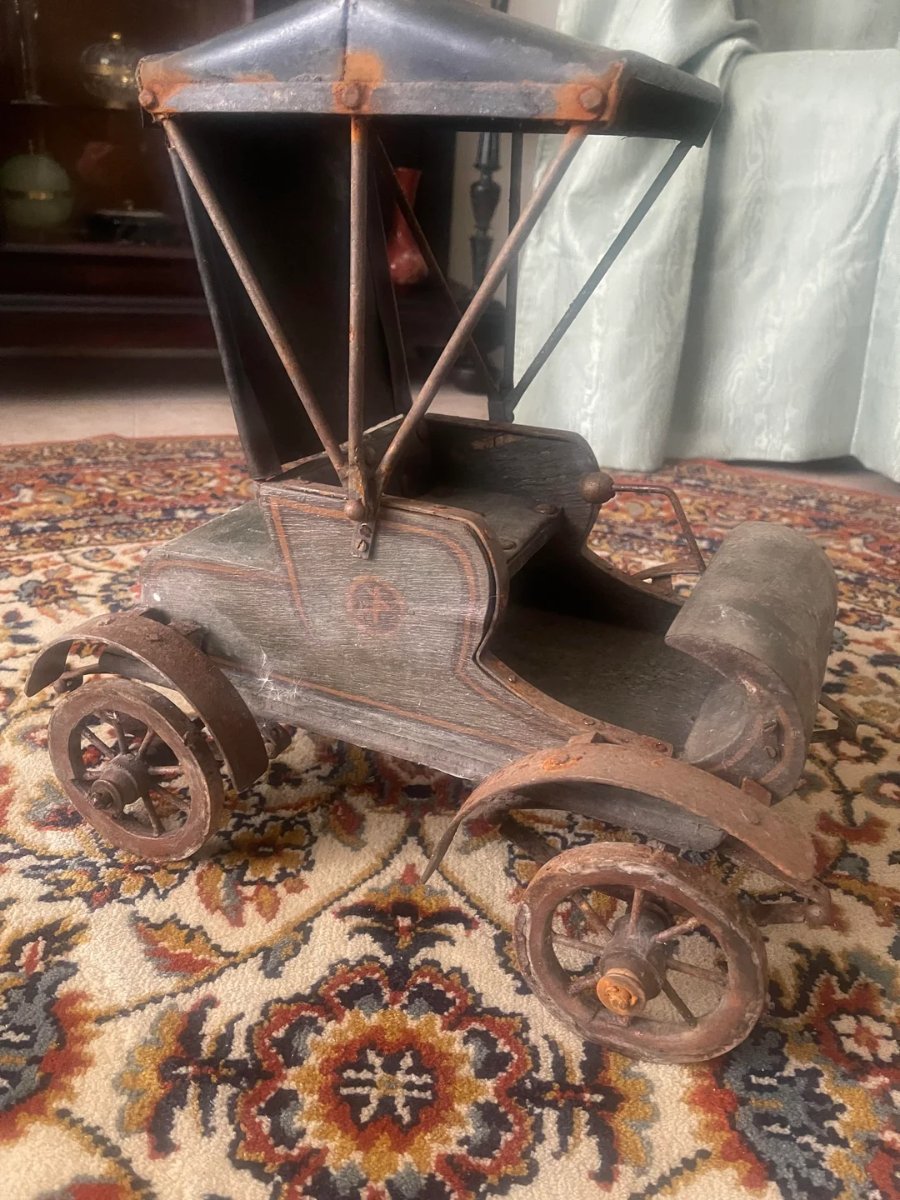
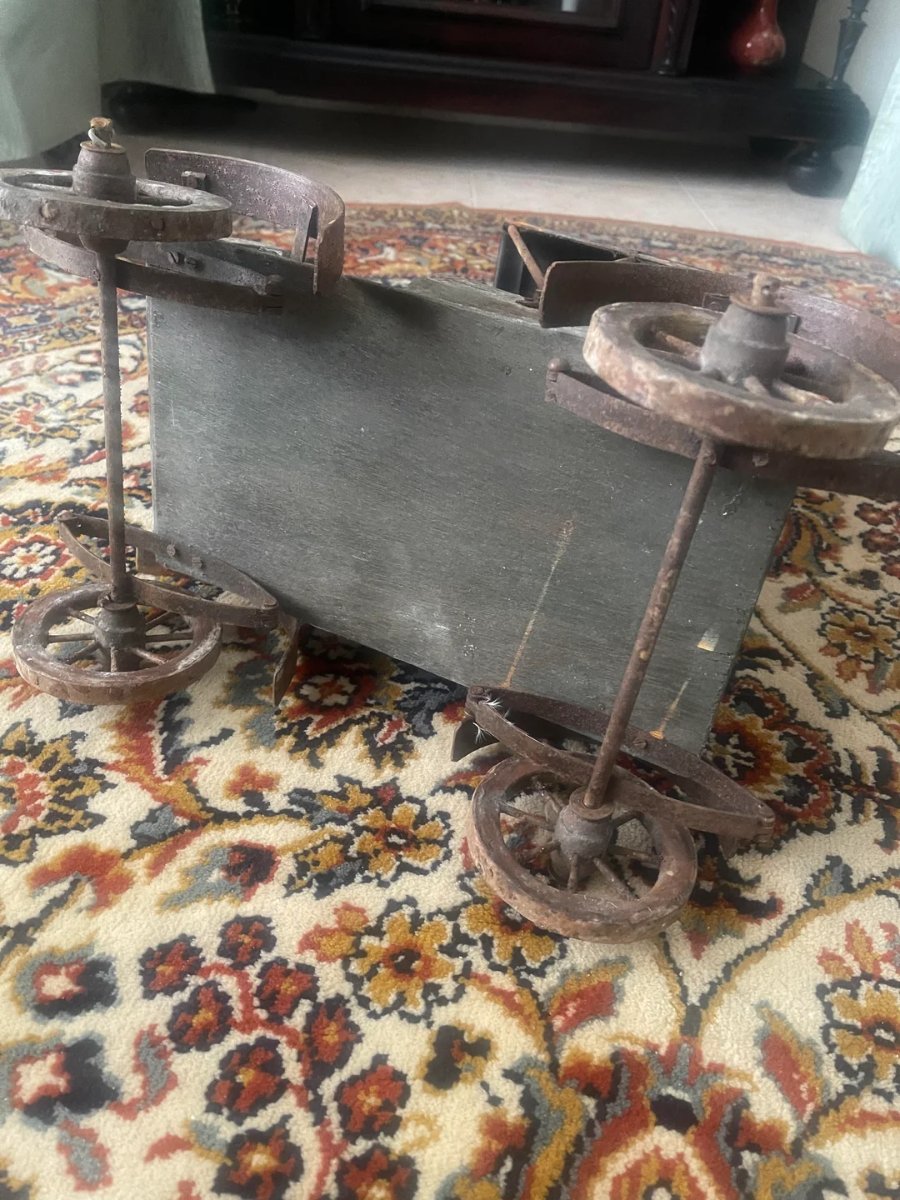
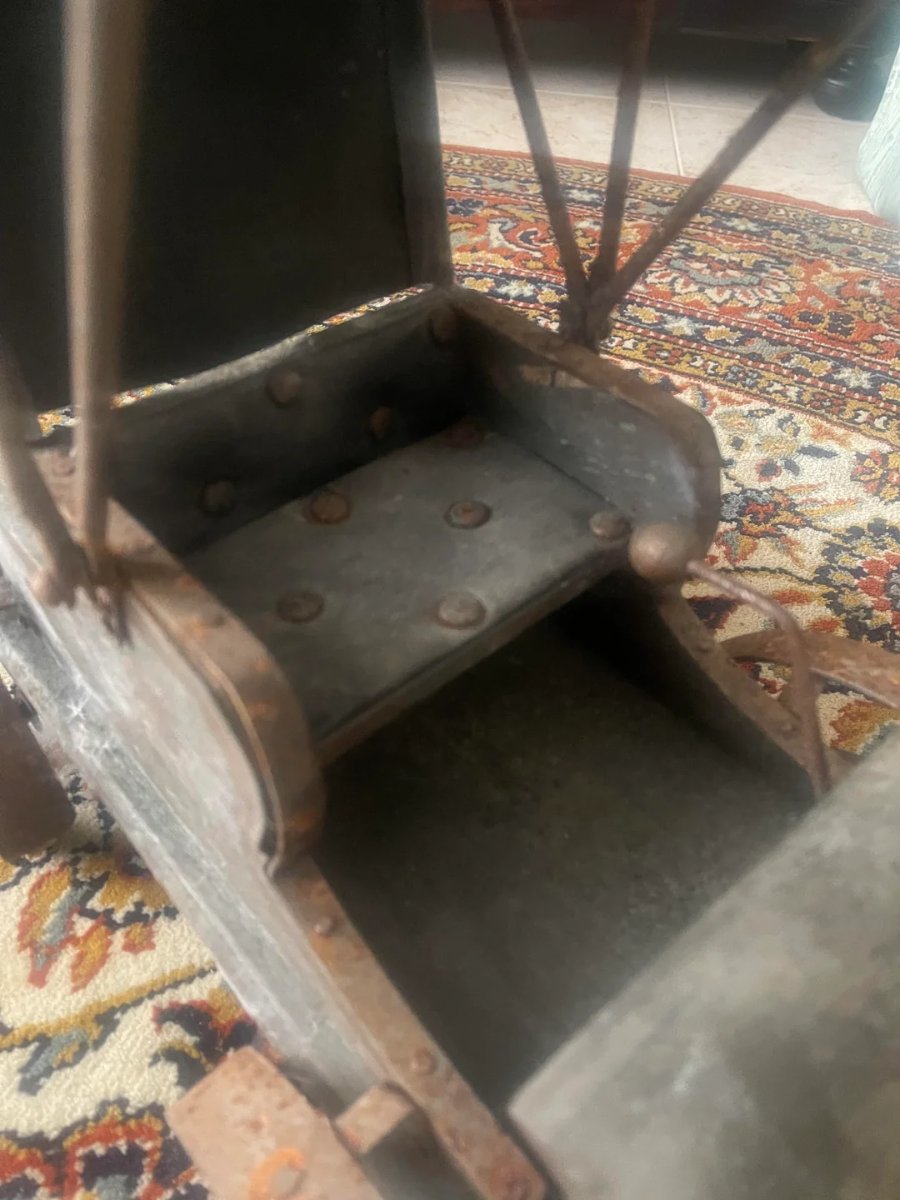
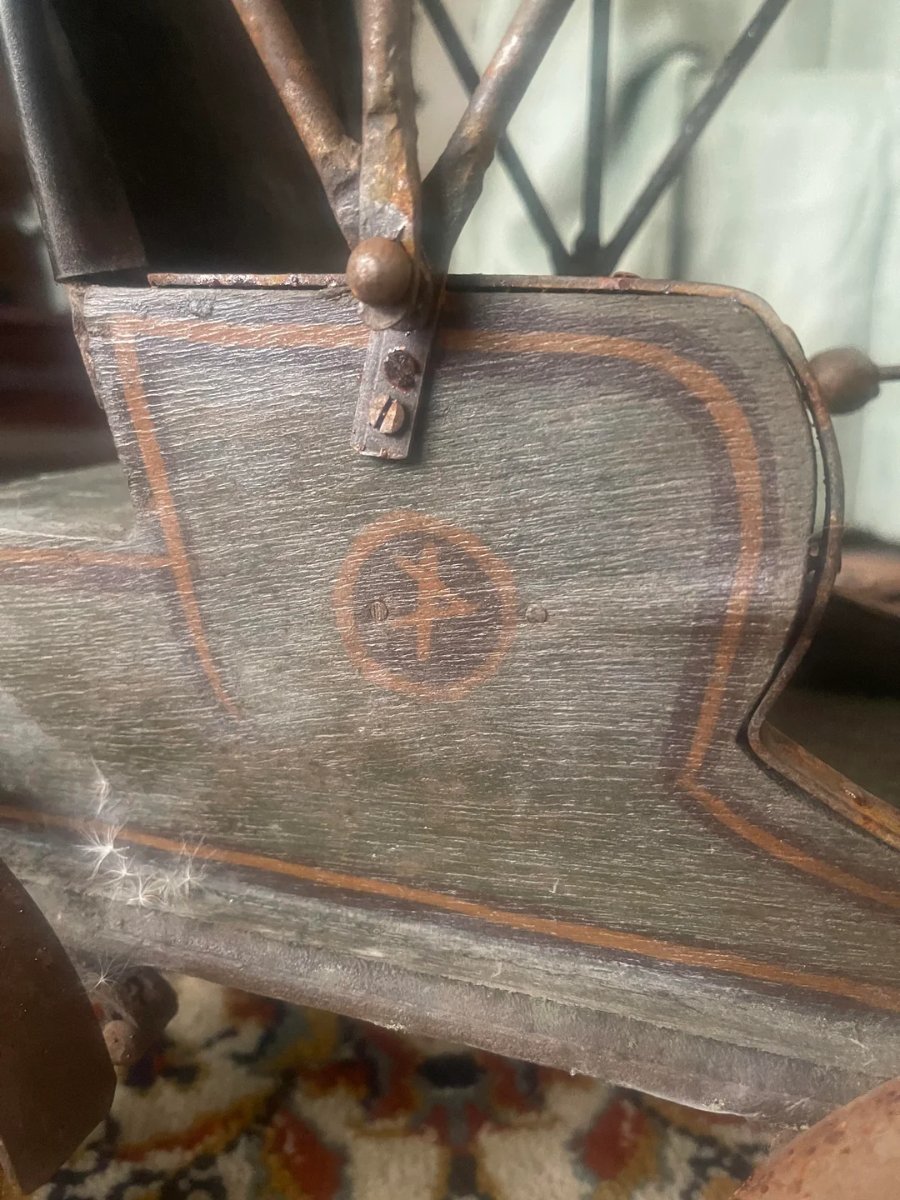
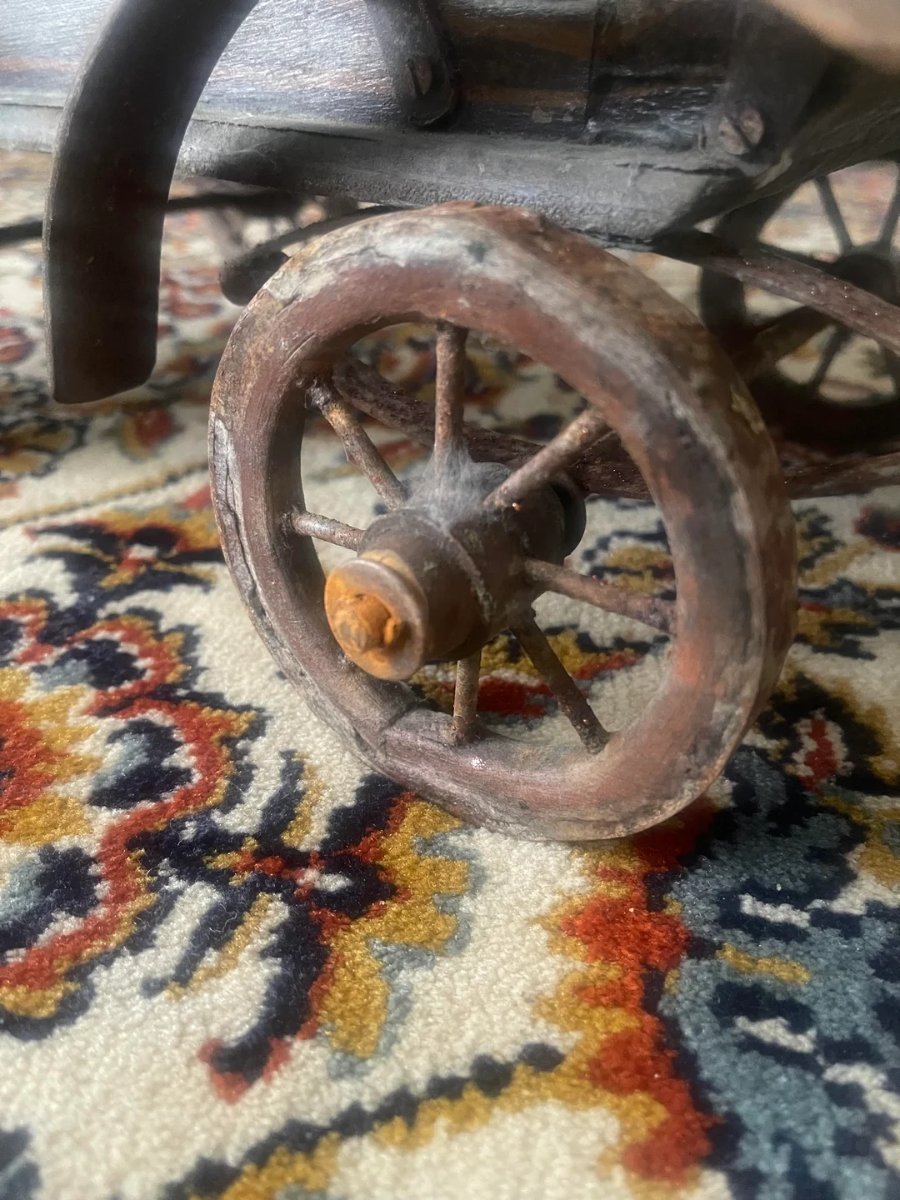
Converse Wood and Iron 'Horseless Carriage' Toy, c.1905
Morton E. Converse & Son, Winchendon, Massachusetts · Early 1900s Edwardian
6
Comps Found
$300 – $500
FMV Range
75%
Confidence
The Maker
Morton E. Converse (1837–1917) was a titan of the American toy industry, transforming Winchendon, Massachusetts, into the globally recognized 'Toy Town'. Following his service in the Civil War, Converse initially manufactured pyroligneous acid and woodenware before serendipitously pivoting to toys after carving a miniature tea set for his sick daughter in 1878. By 1903, the Converse facility had expanded to four acres of dedicated manufacturing space, making it the largest wooden toy factory in the world.
While predominantly known for their iconic rocking horses—such as the massive 12-foot 'Clyde' horse built for the town's 150th anniversary—Converse & Son was highly innovative in its material applications. By acquiring the New England Lock & Hinge Co. in the 1890s, the firm began integrating stamped steel, tin, and cast iron with their traditional wood constructions. The firm's exceptional quality was formally recognized when they were awarded a medal and diploma for the 'finest toys in the world' at the 1893 World's Columbian Exposition in Chicago, elevating their surviving works from simple folk craft to premier industrial antiques.
Valuation
$300 – $500
Insurance / Replacement: $800
Market-informed estimate: direct comparable sales were unavailable, so this range relies on broader market evidence and condition-adjusted benchmarks. This c. 1905 Converse 'Horseless Carriage' is a historically significant example of Edwardian-era toy manufacturing by Morton E. Converse & Son of Winchendon, Massachusetts. Featuring a painted wood body paired with cast-iron spoked wheels, it beautifully encapsulates the transitional 'Brass Era' of American motoring. The inclusion of a functional folding leatherette top is a critical feature, as these fragile material elements rarely survive a century of play intact. Drawing on comparable sales of Converse touring cars and early wooden automobiles, this piece represents a highly desirable crossover collectible appealing to both antique toy purists and early automobilia enthusiasts.
Market Analysis
Direct exact-match comparables for this specific 'Horseless Carriage' with an intact leatherette top are sparse, requiring a market-informed estimate based on structurally similar Converse vehicles. The valuation is anchored by the strongest accepted medium-tier comparables: a c. 1912 Converse Two-Seat Touring Car (painted wood, non-windup) which achieved $300, and a Converse Pierce Arrow Fire Chief Car which realized $250. These establish a reliable baseline for standard Converse wooden automobiles.
Secondary context is provided by outlier sales that define the market boundaries. A fully restored Converse wind-up car achieved $850, and a highly graphic tin-litho horse-drawn ice wagon realized $900. Because the subject item lacks a mechanical clockwork motor and is presumed unrestored, it cannot reach the $850+ ceiling. However, the presence of the functional folding leatherette top acts as a significant value multiplier over the $300 base touring car, as mixed-media textiles from this era have an exceptionally low survival rate. Therefore, an auction estimate of $300–$500 reflects the premium for the fragile top while properly discounting against mechanically complex or pristine lithographed examples.
Value Drivers
▲ Presence of the functional folding leatherette top, a fragile mixed-media element with a very low historical survival rate.
▲ Maker provenance from Morton E. Converse & Son ('Toy Town'), establishing it as a premier New England antique rather than a generic folk toy.
▲ Transitional 'Brass Era' subject matter, which attracts crossover interest from early automotive and carriage collectors.
▲ Hybrid material construction (wood body with cast-iron spoked wheels), characteristic of Converse's post-1890s manufacturing innovations.
Concerns
▼ Condition of the leatherette top; any dry rot, tearing, or hinge stiffness will negatively impact the premium associated with this feature.
▼ Originality of the paint; antique toy values are severely penalized if the wood body has been overpainted or heavily touched up.
▼ Wheel casting integrity; cast-iron spoked wheels are brittle and prone to hairline fractures or hub wear from heavy play.
🏛 Best Venue
Specialist Antique Toy Auction (e.g., Bertoia Auctions, Kraft Auction Service)
📈 Upside Potential
If the toy retains over 80% of its original factory paint and the leatherette top is fully intact without dry rot or replacement canvas, competitive bidding among condition-focused collectors could push the hammer price toward $600-$700.
⚠️
Authenticity Notice
Medium risk. While outright modern counterfeits of Converse wood toys are uncommon, 'married' toys (assembled from parts of different broken toys) and undisclosed professional restorations are rampant in the antique toy market. Owners should use UV blacklight analysis to check for modern paint touch-ups and verify that the patina on the cast-iron wheels matches the age of the wooden chassis.
Comparable Sales (6)
Thomaston Place Auction Galleries
2020
$427 USD
Converse "City Hall Park" Trolley (c. 1900)
MEDIUM
SOLD
Kraft Auction Service
$300 USD
Converse Two-Seat Touring Car (c. 1912)
MEDIUM
SOLD
Kraft Auction Service
$850 USD
Restored Converse Windup Car
MEDIUM
SOLD
Bertoia Auctions
Dec 2025
$250 USD
Converse Pierce Arrow Fire Chief Car
MEDIUM
SOLD
Research Details
2
Rounds
6
Comps
0/0
Questions
6
Sources
Have something you're curious about?
Get your own free report →Want a report like this for your own item?
Snap a photo. Get the story, the comps, and the value — free.
Try it free →