v2 (Default) (Latest) · 2/3
Comparable Sales Report
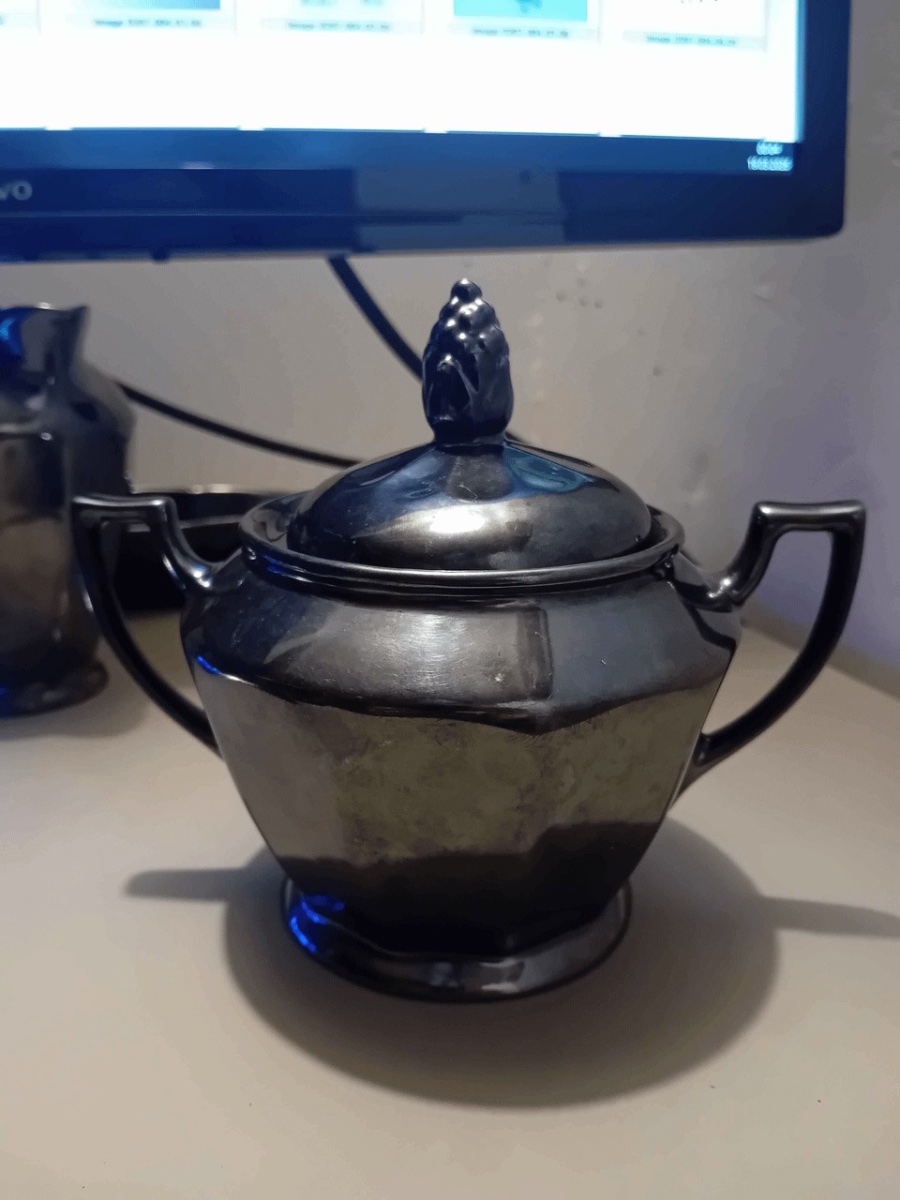
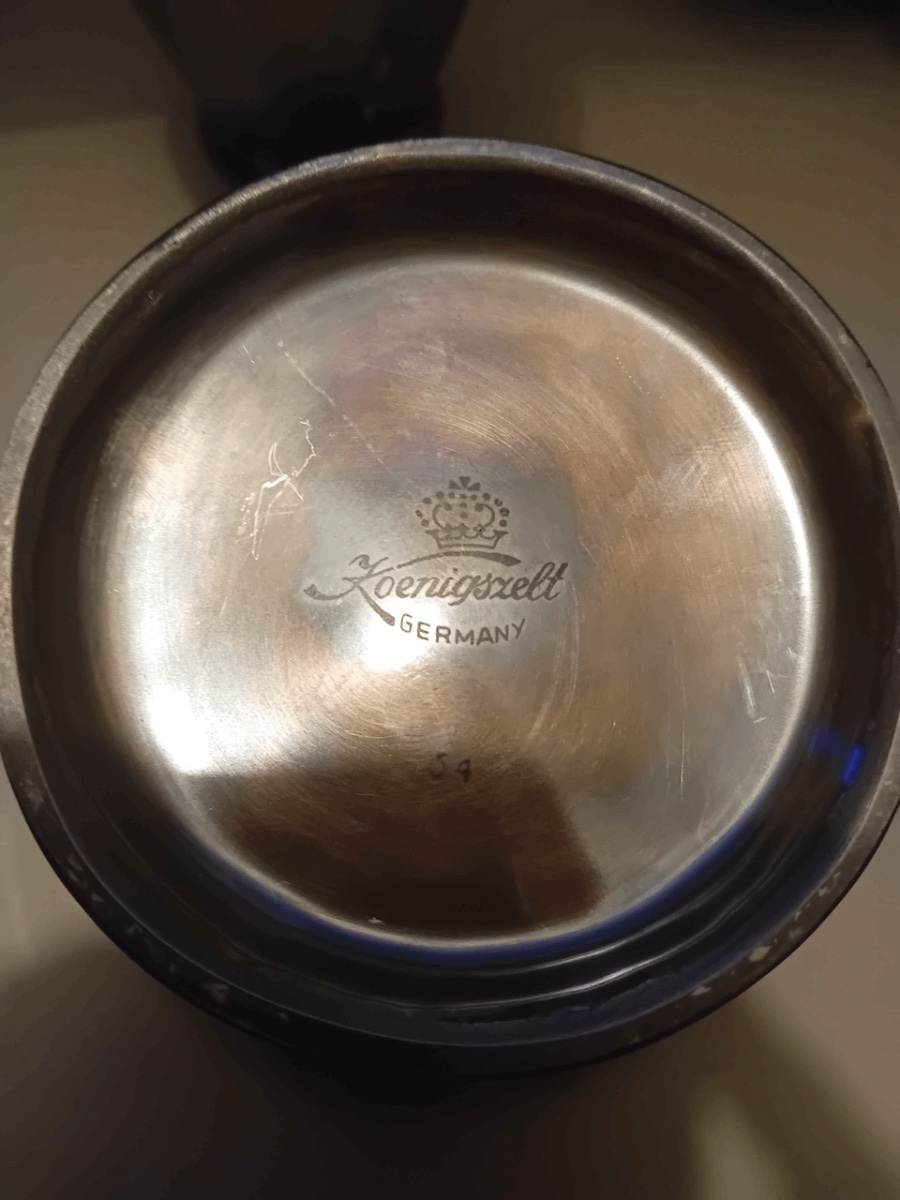
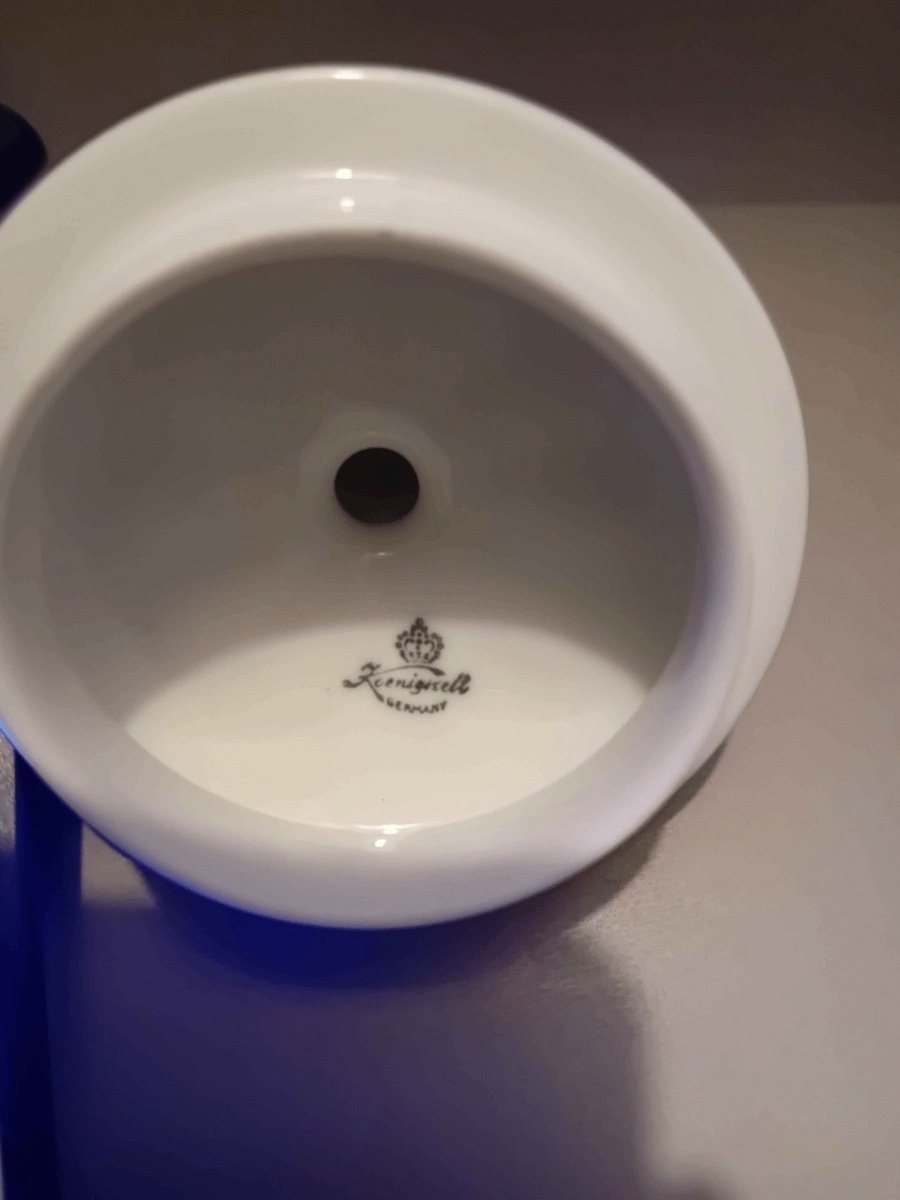
Koenigszelt Art Deco Silver Luster Porcelain Sugar Bowl, c.1930s
Porzellanfabrik Koenigszelt, Silesia (then Germany, now Poland) · 1930s Art Deco
The Maker
Porzellanfabrik Koenigszelt AG was a titan of pre-war European ceramics, established in Silesia (then Germany, now Jaworzyna Śląska, Poland). Operating heavily under Hutschenreuther majority ownership during the early 20th century, the factory was renowned for producing high-quality domestic and commercial wares. Their technical prowess was perhaps best highlighted when they were commissioned to create the specialized, ultra-lightweight porcelain dinnerware used aboard the Hindenburg zeppelin.
During the 1930s Art Deco period, Koenigszelt embraced modernist aesthetics, producing streamlined forms clad in brilliant 'Silberporzellan' (silver porcelain) luster and metallic overlays. They occasionally collaborated with the prestigious metalware firm WMF (Württembergische Metallwarenfabrik) on these silvered wares. Following World War II, shifting geopolitical borders placed Silesia in Poland; the Koenigszelt factory was nationalized and eventually renamed Karolina. As a result, pieces bearing the specific 'Koenigszelt GERMANY' stamp are firmly locked to the pre-1945 historical timeline.[1][2]
Valuation
$15 – $25
Insurance / Replacement: $50
This is a 1930s Art Deco silver-lustered porcelain lidded sugar bowl produced by Porzellanfabrik Koenigszelt in Silesia. The distinct green "Koenigszelt GERMANY" mark tightly dates the piece to the pre-1945 era, prior to the region's transfer to Poland. While striking in its machine-age metallic aesthetic, its value is significantly constrained because it is a single, orphaned vessel separated from its matching creamer or tea service. Consequently, the fair market value reflects secondary-market demand for standalone decorative accents or specific factory replacement pieces.[1][2]
Market Analysis
The market for 1930s European factory porcelain relies heavily on set completeness and surface condition. Direct sold comparables from eBay and eBid demonstrate that complete matching sets (creamer and sugar bowl) in this exact Koenigszelt silver-dipped technique consistently realize between $34 and $40. Because the subject item is an orphaned sugar bowl missing its creamer, a strict deduction applies, as buyers are typically seeking complete services rather than single vessels. While retail platforms feature similar silver-lustered Koenigszelt sets listed at $200+ (such as a 1stDibs WMF co-branded set) or $97 for hand-painted variants on Etsy, these represent gallery-level retail asks and premium co-branding rather than auction-realistic sold values for standard factory singles. The $15 to $25 fair market value accurately reflects the baseline replacement demand for a standalone lidded vessel, assuming standard vintage condition with no severe rubbing to the metallic finish.[1][2][3]
Value Drivers
▲ Presence of the original, matching lid, avoiding a 'married piece' deduction.
▲ Specific 'Koenigszelt GERMANY' mark tightly dating the item to the 1930-1945 pre-war era.
▲ Striking full-body silver luster glaze, emblematic of Art Deco machine-age design.
Concerns
▼ The item is an orphaned piece separated from its matching creamer and teapot, strictly capping collector demand.
▼ Silver luster glazes are notoriously susceptible to oxidation and handling rub at stress points (finials, handles, rims).
▼ The overall market for incomplete mid-tier European factory porcelain remains soft, with supply outpacing demand.
🏛 Best Venue
eBay or Replacements, Ltd., as these venues attract buyers actively searching for exact factory marks to complete heirloom sets.
📈 Upside Potential
If a secondary WMF (Württembergische Metallwarenfabrik) stamp is discovered hidden under tarnish on the base, the piece would classify as a premium collaboration, doubling its standalone value.
Comparable Sales (5)
Poshmark ↗
2023/2024
~$42
Koenigszelt Fine China Silver/Platinum Trim Creamer & Sugar Bowl
HIGH
SOLD
eBay ↗
Early 2024
$35 - $40
Koenigszelt Germany Porcelain Silver Dipped Creamer & Sugar Bowl Set
MEDIUM
SOLD
1stDibs ↗
2024/2025
$250 - $400
Art Deco German Silver Lustre Porcelain Sugar Bowl & Jug (WMF / Koenigszelt)
LOW
LISTED
Research Details
1
Rounds
5
Verified Comps
0/0
Questions
3
References
References
Have something you're curious about?
Get your own free report →Want a report like this for your own item?
Snap a photo. Get the story, the comps, and the value — free.
Try it free →