v2 (Default) (Latest) · 2/3
Comparable Sales Report
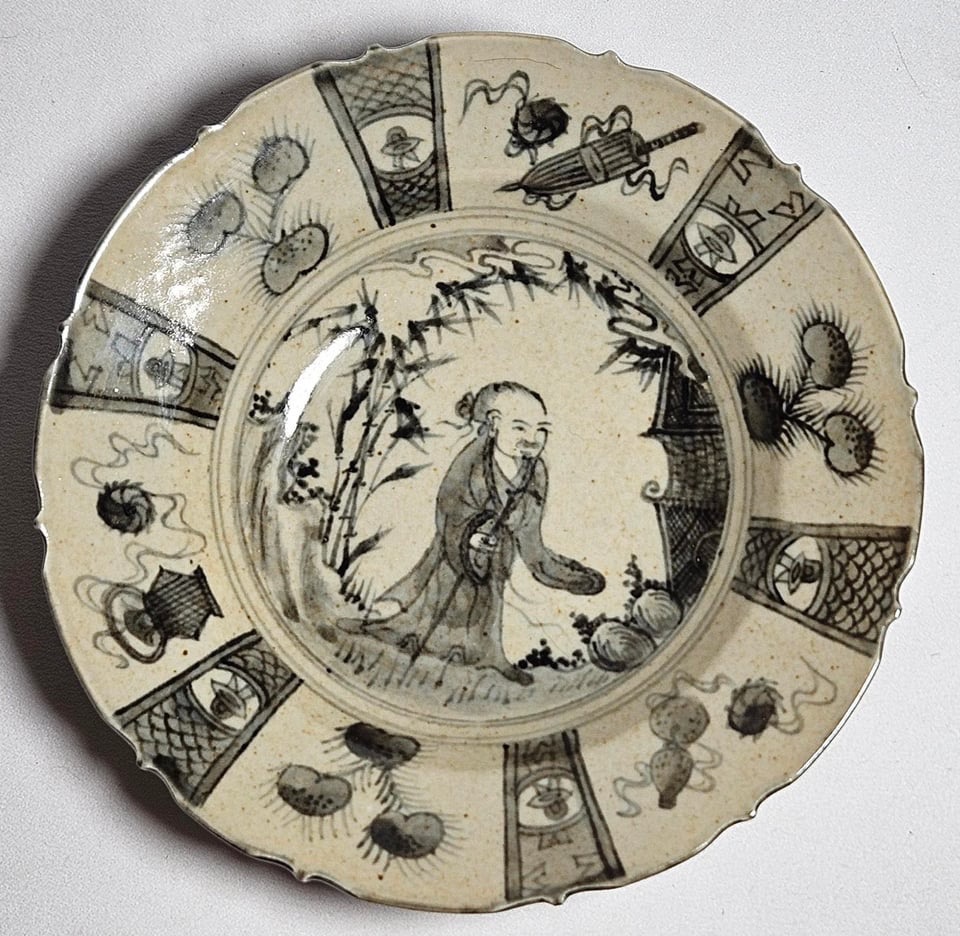
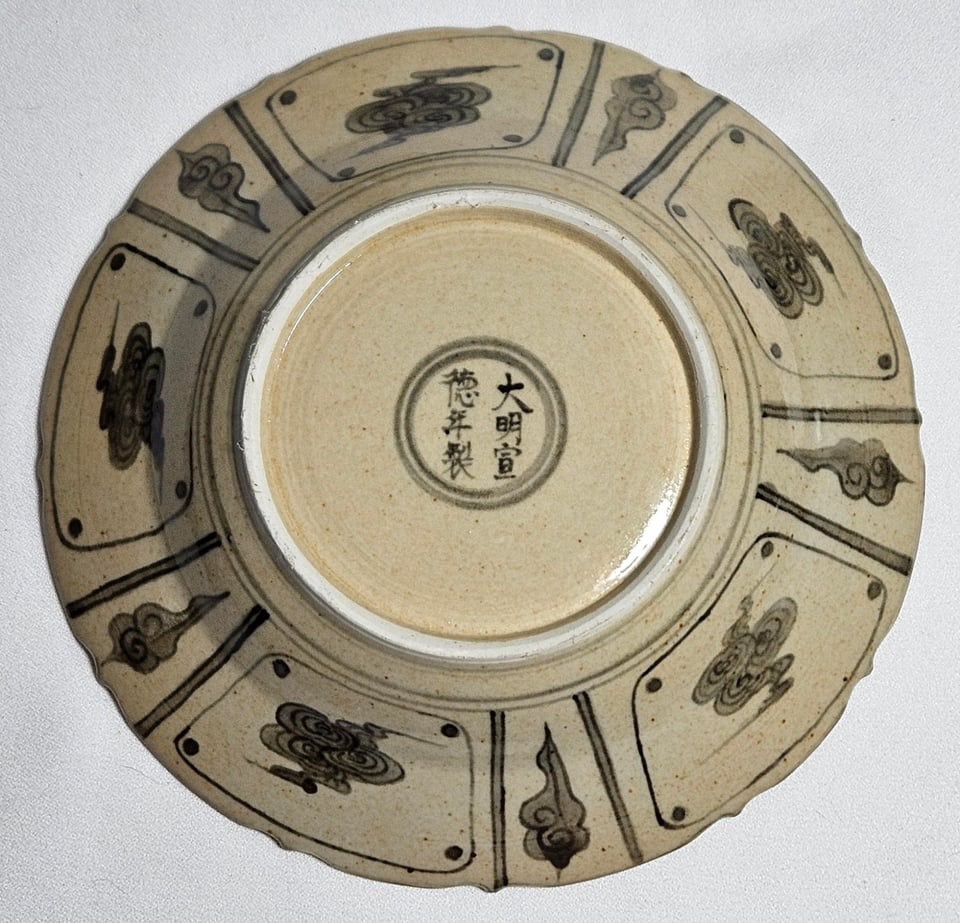
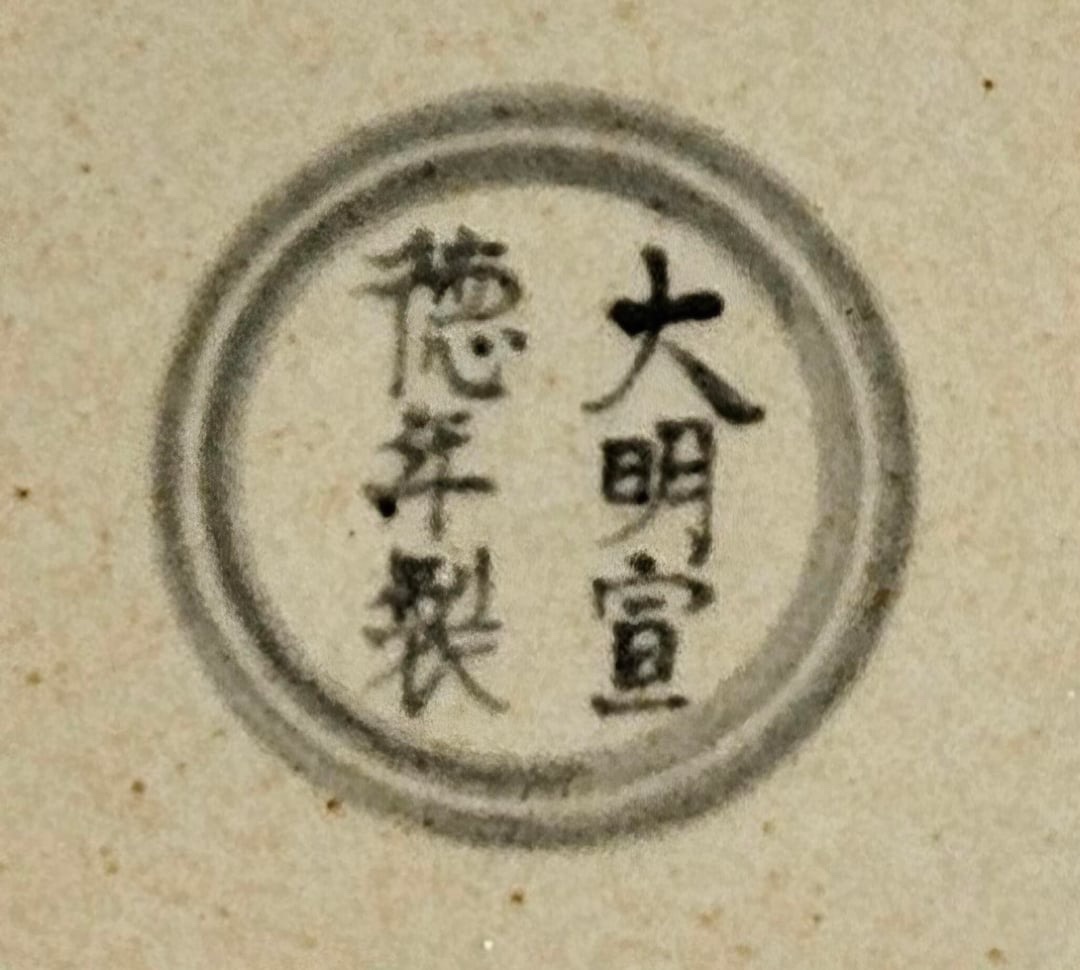
Chinese Provincial Blue and White 'Scholar' Plate with Apocryphal Xuande Mark
Provincial kilns of Southern China, likely Fujian or Guangdong province · Late 19th to Early 20th Century (Late Qing or Republic Period)
The Maker
This piece is attributed to an unknown provincial kiln artist operating in Southern China, likely within the Fujian or Guangdong provinces, during the Late Qing (Guangxu) to early Republic periods (late 19th to early 20th century). These regional kilns produced 'minyao' or 'people's ware'—ceramics intended for the domestic market and export, distinct from the heavily controlled and rigidly documented Imperial kilns of Jingdezhen. The artisans painting these provincial wares were known for their loose, expressive, and highly stylized brushwork, executed rapidly to meet production demands. The presence of an apocryphal six-character Xuande reign mark (1426–1435) on the verso is a critical identifier of the era's decorative traditions. In Chinese ceramic history, the Xuande period is universally celebrated as the absolute 'Golden Age' of blue and white porcelain. By the late 19th century, provincial potters frequently applied this mark to their works. This was not historically intended as a forgery to deceive buyers, but rather as an homage to the mastery of the past, signaling a reverence for the aesthetic heights achieved centuries prior. Today, these works are collected as authentic late 19th/early 20th-century decorative folk arts.[1][2]
Valuation
$100 – $200
Insurance / Replacement: $300
This is a Late Qing to Republic period Chinese provincial blue and white painted ceramic artwork, featuring a traditional scholar motif and bearing an apocryphal Ming Dynasty Xuande mark. Its value is anchored by the recognizable literati subject matter and the hand-painted underglaze cobalt artistry, which elevate it slightly above generic floral provincial wares. The $100 to $200 fair market value range reflects stable, global auction outcomes for structurally intact single plates of this era, heavily dependent on the absence of hairline cracks or rim restoration.[1][2]
Market Analysis
The market for antique Chinese provincial painted ceramics is highly active but distinctly tiered, driven largely by entry-level antiquity collectors and interior design buyers. Because direct comparables for this exact combination of motif and mark are sparse, this valuation is market-informed by bounding the floor and ceiling of similar minyao wares. Baseline provincial dishes featuring generic floral or geometric patterns establish a strict market floor of $80 to $100, as evidenced by outcomes at Strauss & Co and secondary retail platforms like eBay. The presence of the 'Scholar' (literati) figure and the apocryphal Xuande mark pushes this specific plate into a higher tier. A LiveAuctioneers comparable (April 2023) featuring a matching scholar motif realized $150, while a Republic-era dish with the exact apocryphal mark at Bertolami Fine Art achieved $220. The gap between these provincial wares and authentic 15th-century Ming Imperial pieces is vast; genuine period works routinely command high five-to-six-figure sums at institutions like Christie's. Therefore, the $100 to $200 FMV strictly reflects its status as an accessible, Late Qing/Republic decorative artwork.[1][2][3]
Value Drivers
▲ Presence of the 'Scholar' (literati) motif, which carries a collector premium over standard floral or geometric minyao designs.
▲ Apocryphal 6-character Xuande reign mark, which appeals to collectors of traditional homage/revival styles.
▲ Original hand-painted underglaze cobalt brushwork exhibiting the lively, expressive style typical of Southern kilns.
Concerns
▼ Heavy condition dependency: minor rim fritting ('flea bites'), invisible hairline fractures, or staple repairs will strictly penalize value by 50% to 70%.
▼ Its 'minyao' (folk kiln) origins inherently cap the value ceiling, preventing it from reaching the institutional premiums of Imperial wares.
▼ High market saturation of 19th and 20th-century Chinese export ceramics limits scarcity-driven demand.
🏛 Best Venue
Online auction aggregators (such as LiveAuctioneers or Invaluable) or specialized decorative antique marketplaces (Chairish) to reach an interior design-focused audience.
📈 Upside Potential
Exceptional vibrancy in the cobalt blue (lacking the grey/black muddiness common in provincial firings) and a structurally flawless porcelain support could push the hammer price to the top of the $200 estimate.
⚠️
Authenticity Notice
Medium risk regarding era attribution. While the piece bears an apocryphal 15th-century mark, it is accepted as a genuine late 19th/early 20th-century homage. Buyers should verify late-Qing firing anomalies (ash staining, glaze pinholing, correct foot rim wear) to rule out late 20th-century modern decorative reproductions.
Comparable Sales (4)
Strauss & Co ↗
Apr 2020
$100
A Chinese Provincial Blue and White Dish, Qing Dynasty, Late 19th C.
MEDIUM
SOLD
LiveAuctioneers ↗
April 2023
$150
Chinese Qing Dynasty Blue & White Porcelain Scholar Dish
MEDIUM
SOLD
Bertolami Fine Art ↗
2022
$220
'Blue and White' Porcelain Dish with Figures, Apocryphal Xuande Mark
MEDIUM
SOLD
Research Details
1
Rounds
4
Verified Comps
0/0
Questions
3
References
References
Have something you're curious about?
Get your own free report →Want a report like this for your own item?
Snap a photo. Get the story, the comps, and the value — free.
Try it free →